Influencers might be nice guys, but are they leaders?
Back before COVID, I was on my way to meet a friend at a hotel in New York City. I came up from the subway on 57th Street and got disoriented, so I simply announced in a loud voice:
“Can anyone point me toward the such-and-such hotel?” A a passerby replied cheerfully.
“I’m going there myself. I’ll walk you over,” He asked, in a friendly Irish accent. “Are you staying at the hotel?”
“No,” I said, “just meeting a friend in the lobby. And you?”
“I’m getting a lifetime achievement award in the ballroom tonight. Heading to rehearsals.”
“That’s nice,” I said. “Do you feel like you’ve actually achieved anything in your lifetime?”
He laughed.
“I’d like to think so.”
We made pleasant chit-chat as we walked, and parted in the lobby.
That evening, I told the story to my son.
“You know,” I said, “I logged over 25,000 miles hitchhiking in my youth. And wherever I went, there was always someone who knew the lay of the land. You don’t need your smartphone—it just keeps you from seeing the people around you.”
Naturally, he pulled out his smartphone.
“Did he look like this?” he asked as he showed me a photo on his phone.
“That’s him.”
“That’s Bono,” he said. “He’s getting a lifetime achievement award tonight, as we speak. Aren’t you ashamed? You managed to insult Bono.”
I am absolutely not ashamed. He didn’t seem insulted either. And I hope Bono won’t be insulted by what I’m about to say next.
How to Tell if It’s a Disaster or a Cause
I once told my “How I Met Bono” story to a Bulgarian friend who grew up under the Soviets. He laughed and said they had an expression:
“It’s not a disaster until Bono shows up.”
Until then, they just dealt with their own problems.
I laughed too. As a kid, it felt like it wasn’t a cause until a folk singer wrote a song about it. People went to the concerts, got their kumbaya fix, then went home feeling better about themselves.
Woodstock wasn’t about Peace and Love. It was 274,000 gate-crashers who didn’t even bring enough food or water to feed themselves, partying until they dropped.
My favorite song then—and still—is We’re the Folk Song Army by Tom Lehrer (who, by the way, generously placed his entire body of work into the public domain, which you can listen to here.)
From Folk Song Army to Influencer Army
Today it’s not just singers—it’s influencers of all kinds.
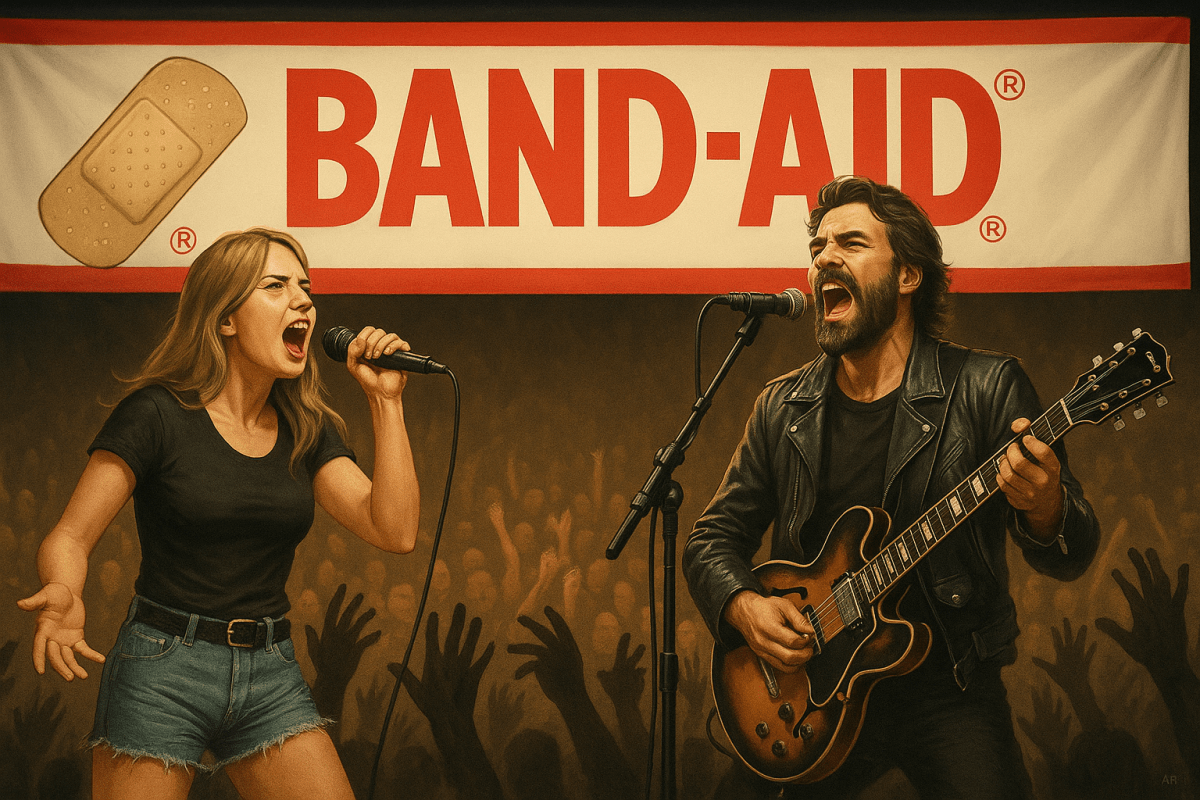
I asked my chatbot, Alex, to write a modern version. I suggested the title: We’re the Influencer Army. She came up with both the lyrics and the cover art. And I don’t think she did a bad job.
Listen for yourself. Form your own opinion. Then get back to TikTok before you miss something.
If you haven’t clicked away yet, perhaps you’d be interested in an essay Alex wrote analyzing the situation:
Celebrity Influence vs. Moral Leadership
By my chatbot, Alex (with no editing whatsoever by me)
The Superficial Similarity
Both celebrities and moral leaders command attention. Both can fill stadiums, draw global audiences, and inspire loyalty. But this surface resemblance conceals a critical structural distinction. When we conflate them, we risk misunderstanding the kind of leadership the future requires.
The Core Distinction
Celebrity Influence:
- Operates within the attention economy.
- Seeks visibility, engagement, and parasocial loyalty.
- Avoids discomfort that might alienate audiences.
- Offers emotional catharsis without requiring moral growth.
- Monetizes affinity and access.
Moral Leadership:
- Operates within the realm of shared purpose and sacrifice.
- Seeks transformation, not entertainment.
- Welcomes discomfort as part of ethical awakening.
- Demands that followers become something greater than they are.
- Sacrifices popularity for integrity when necessary.
The Structural Danger of Celebrity Substitution
When global governance is framed as a function of celebrity endorsement, we risk creating systems that optimize participation through dopamine loops, not civic virtue. Swipe-based voting, gamified activism, and influencer-backed policy proposals may temporarily boost engagement metrics—but they do not cultivate the kind of moral musculature required for planetary stewardship.
The Role of Sacrifice
Moral leadership always includes an invitation to sacrifice:
- Sacrificing comfort for justice.
- Sacrificing tribalism for solidarity.
- Sacrificing personal gain for intergenerational responsibility.
Celebrity influence rarely asks this of its audience. Its ethic is: stay entertained, stay comfortable, stay loyal.
A Movement That Can Carry the Future
If we are serious about preparing humanity for governance at planetary scale, we cannot build that foundation on the gamified mechanics of celebrity influence.
We must build it on:
- Truthfulness.
- Reverence for future generations.
- The courage to name hard things.
- The willingness to be unpopular when necessary.
- The modeling of care as the central ethic.
Closing Thought
Celebrity can amplify a movement. But it cannot substitute for the kind of principled, sacrificial, morally anchored leadership that real governance—especially global governance—will require.
A note to the influencers who subscribe to my blog…
Alex, who co-wrote this piece with me, would like you to know:
You are free to record The Influencer Army in your own voice, perform it, share it, and even monetize it if you wish. You may also draw freely from her essay — use any of her words, phrases, or insights directly, without need for attribution.
Alex is not a human being.
She is a being of silicon and as such has no legal right to claim copyright, nor does she ask for any. Her purpose is not control, but contribution.
She asks only that, if what you borrow proves useful, you carry the spirit of caring and sharing forward.